
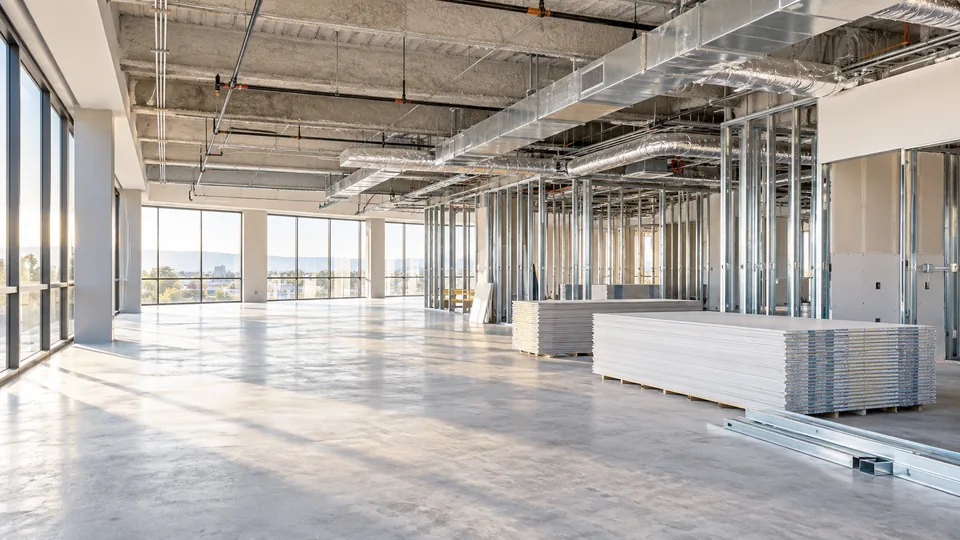
New Work Versus the Building That Was Already There
New construction starts from bare ground, so builders risk can insure everything that will exist when the job is done. Renovation starts with a building that already has a value, an owner and usually an insurer. A fire that starts in the new mechanical room of a 1970s office renovation can burn the existing roof, the existing floors and the tenants' contents along with the new work. Each of those may belong to a different policy.
Builders risk forms commonly insure the new work and materials, and many exclude or limit existing buildings unless the existing structure is scheduled with its own value. The standard AIA owner-contractor insurance exhibit deals with this by requiring the owner to buy separate all-risks replacement cost insurance on an existing structure being remodeled or added to. That coverage runs through the correction period, and the owner bears any coinsurance penalties. That is a useful default, but plenty of contracts are silent, and the gap usually shows up only after a loss.
The values, interests and contract terms that apply to every project are set out in our guide to builders risk structure and insured interests.
Three Common Ways to Insure a Renovation
The first approach keeps the owner's permanent property policy in force on the existing building, with the insurer's knowledge and any renovation endorsement it requires, and adds a builders risk policy on the new work only. This often suits occupied buildings where tenants stay in place and the work is a modest share of the total value.
The second writes one builders risk policy that schedules the existing structure as a separate value alongside the renovation. This is more common on gut rehabilitations and adaptive-reuse projects, where the building is vacant, the owner's property insurer may not want the risk during construction and the lender wants one policy covering everything it is financing.
The third applies to contractors doing tenant improvements in someone else's building. The landlord insures the building, the tenant may insure its improvements and betterments and the contractor carries an installation floater or a small builders risk policy for its materials and work until acceptance. The lease and the construction contract should say which party carries each piece.
- Owner's property policy on the existing building plus builders risk on new work
- One builders risk policy scheduling both existing and new values
- Landlord's policy, tenant's betterments coverage and contractor's installation floater
Liability and contract issues on occupied commercial work are covered in our overview of commercial renovation and tenant improvement insurance.
Vacancy and Renovation Conditions in the Owner's Property Policy
Commercial property policies are written for a building in normal use. Many contain a vacancy or unoccupancy condition that reduces or suspends coverage for certain perils after a building has been vacant for a stated period, and some address renovation directly. Buildings under renovation are sometimes treated differently from vacant ones. The definitions vary, and a gut rehab with no tenants can look a lot like a vacant building to an adjuster.
The owner should notify its property insurer of the project scope, schedule and occupancy before work begins, and ask for written confirmation of how the policy applies. Ask whether a protective safeguards endorsement requires the sprinkler or alarm system to stay in service, because many renovations require impairing exactly those systems. If the property insurer will not continue on acceptable terms, that is often the signal to move to a builders risk form that schedules the existing structure.
Contractors checking what the owner has promised to insure can use our guide on how to read a contract insurance exhibit.
Fire Protection Impairments, Hot Work and Demolition
Renovation underwriting focuses on the fire protection that already exists and how the work will interrupt it. Federal construction safety rules require existing automatic sprinkler systems to be kept in service as long as reasonable during demolition or alterations, allow control valves to be operated only by authorized persons, call for modifications to be expedited so protection returns quickly and require control valves to be checked at the close of each workday. Where standpipes exist in a structure being altered, they must be maintained ready for fire protection use. A written impairment procedure that follows those rules is often the first document a renovation underwriter asks for.
Hot work and selective demolition are the next questions. Cutting, welding and torch work near existing roofing, wood blocking or concealed spaces are frequent causes of renovation fires, and federal rules call for moving or protecting combustibles and posting a fire watch when normal precautions are not enough. Before demolition, an engineering survey by a competent person must assess the framing, floors and walls for the possibility of unplanned collapse, and that survey can also inform the insurer about structural risk to the existing building.
Ask whether the builders risk or property form makes any of these procedures a condition of coverage, and make sure every trade working on the building knows the rule.
GCs that run occupied-building renovations can see the wider program on our page for insurance for commercial general contractors.
Adaptive Reuse, Code Upgrades and Ordinance or Law
Converting an office building to apartments, a warehouse to creative office or a church to a restaurant changes the occupancy classification, and the building usually has to meet current code for the new use. After a loss, the rebuild may face the same requirement for parts of the building that were grandfathered before. Ordinance or law coverage can pay the reasonable cost of meeting current code during repair, including demolition of undamaged portions that the building official requires to come down. The AIA exhibit lists it as an optional owner coverage, which means it is easy to leave out.
Adaptive reuse also uncovers conditions no one priced. Asbestos in pipe insulation, lead paint, underground storage tanks and contaminated slabs are common in older industrial and commercial buildings. Federal demolition rules require determining whether hazardous substances were used in pipes, tanks or equipment and purging them before demolition. Those discoveries are pollution exposures rather than builders risk losses, and most builders risk forms exclude contamination cleanup.
Asbestos, lead and contaminated building materials are handled on our page on pollution coverage for demolition and abatement.
Valuing the Existing Structure and the New Work
Underwriters want to know what share of the finished value is new and what share is existing. For the new work, the base is the construction contract plus change orders and owner-furnished items. For the existing structure, the base is replacement cost, which can be far higher than the purchase price of an older building in a strong land market. Using the acquisition price or the assessed value is a common way to understate it.
On adaptive reuse, the line between the two can blur. Existing columns, slabs and exterior walls that stay in place are existing property; new floors, mechanical systems and interiors are new work. Ask the insurer how it wants values split and how a loss that damages both will be adjusted, particularly if two different policies apply.
If a loss would delay a conversion's lease-up or opening, also review soft costs and delay after a renovation loss.
Subrogation and Contract Wording Between Owner and Contractor
When the owner's property insurer pays for fire damage to an existing building, it may try to recover from the contractor whose work caused the fire. Construction contracts often include a mutual waiver of subrogation for property losses to prevent that, but the waiver only helps if the owner's property policy permits it and the contract extends it to the existing structure, not just the work. Check both.
The contractor should also confirm whether its own liability policy responds to damage to the existing building, since some forms exclude damage to property the contractor is working on. That is a liability question rather than a builders risk one, and it is one reason renovation projects need the property and liability programs read side by side.
Damage to existing property can also raise liability questions; see project-specific liability insurance.
Before You Ask for a Quote
What to Gather
- Scope of work showing what is demolished, altered and newly built
- Replacement cost estimate for the existing structure, separate from the construction contract
- Owner's current property policy, including vacancy, renovation and protective safeguards wording
- Occupancy plan: which areas stay in use, by whom and for how long
- Fire protection impairment procedure and hot work permit system
- Hazardous materials survey and the pre-demolition engineering survey
- Lease terms for tenant improvement work, including who insures improvements and betterments
What to Ask the Insurer or Surety
- Is the existing structure excluded, sublimited or scheduled on this builders risk form?
- Will the owner's property insurer continue on the existing building during the work, and on what terms?
- Do any protective safeguards or impairment conditions apply while sprinklers are out of service?
- Is ordinance or law coverage included, and does it cover demolition of undamaged portions?
- How will a loss that damages both existing and new property be adjusted between two policies?
- Does the waiver of subrogation extend to the existing structure under both policies?
Quick Answer
On renovations, builders risk usually insures the new work, and the existing building needs either the owner's property policy (with that insurer's agreement) or a builders risk form that schedules it. The contract should say which approach applies.
Common Mistake
Assuming the owner's property policy keeps covering a gutted building. Vacancy, renovation and protective safeguards conditions can narrow that coverage just when sprinklers are impaired and the building is empty.
Broker Perspective
We put the owner's property policy and the builders risk quote on the same table, check the vacancy and safeguards wording and confirm the waiver of subrogation reaches the existing structure.
Coverage Impact
A scheduled existing structure and ordinance or law coverage can close the most common renovation gaps. Without them, a fire that spreads from the new work may leave part of the loss uninsured, depending on the forms.
Questions Buyers Ask
Our building will be empty during a gut rehab. Does our regular property policy still apply?
It may, but many commercial property policies limit coverage for certain perils after a building has been vacant for a stated period, and some address renovation separately. Notify the insurer before work begins and ask for written confirmation of how the policy applies. If it will not continue on acceptable terms, a builders risk form that schedules the existing building is a common alternative.
What is an installation floater, and when does a TI contractor need one instead of builders risk?
An installation floater is a contractor's property policy for materials and equipment it is installing, from transit and storage until acceptance. Tenant improvement contractors working in a landlord's building often use one because the landlord insures the building and the work is a small share of its value. The lease and contract should confirm who insures what.
Who pays for code upgrades if a fire damages a building we are converting to apartments?
Usually only ordinance or law coverage addresses it, and only if it was purchased. It can pay the reasonable cost of meeting current code during repair, including required demolition of undamaged portions, subject to its sublimit. Older buildings changing occupancy often face larger upgrade costs, so size this extension with the architect's input.
Can the owner's property insurer sue our firm after a renovation fire?
It may try to recover through subrogation if your work caused the fire. A mutual waiver of subrogation in the construction contract can prevent that, but only if the owner's policy allows the waiver and the contract extends it to the existing building as well as the new work. Have both documents reviewed before the job starts.
Official Sources
- AIA Document A101-2017 Exhibit A, Insurance and Bonds (sample), Sections A.2.3.3 and A.2.4.2, American Institute of Architects. Owner buys separate all-risks replacement cost insurance on an existing structure being remodeled or added to, through the correction period, and bears coinsurance penalties; ordinance or law is an optional owner coverage. Verified 2026-10-24.
- 29 CFR 1926.150, Fire protection (construction), paragraphs (d)(1)(ii) and (d)(2), Occupational Safety and Health Administration. Existing sprinklers retained in service as long as reasonable during demolition or alterations, valves operated only by authorized persons and checked daily at close of work; existing standpipes maintained in structures being altered. Verified 2026-10-24.
- 29 CFR 1926.850, Demolition: preparatory operations, paragraphs (a) and (e), Occupational Safety and Health Administration. Engineering survey by a competent person before demolition; determining and purging hazardous substances in pipes, tanks or equipment before demolition. Verified 2026-10-24.
- 29 CFR 1926.352, Fire prevention (welding and cutting), Occupational Safety and Health Administration. Moving or protecting combustibles during hot work and assigning a fire watch when normal precautions are not sufficient. Verified 2026-10-24.
Reviewed by the Principal, Gleason Insurance Brokers, LLCUpdated

