
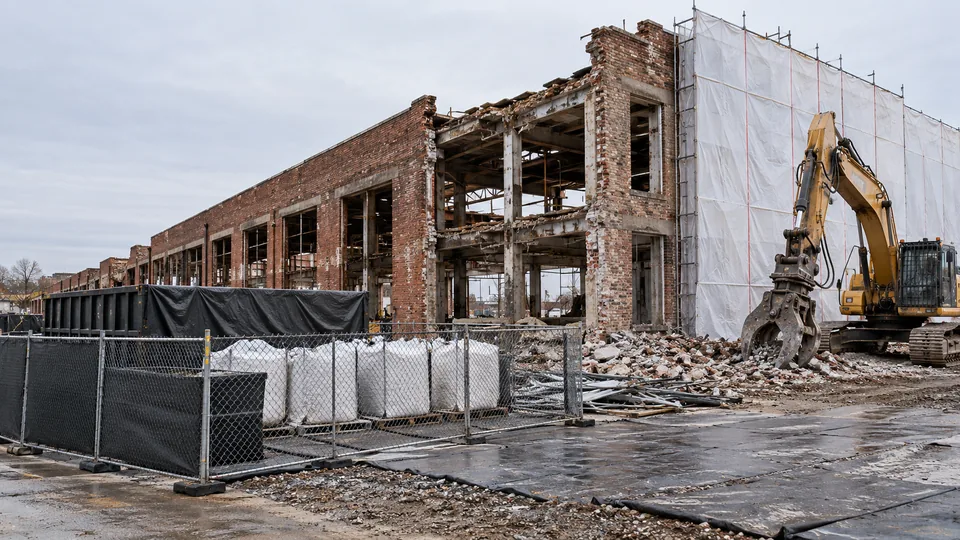
Why Demolition and Abatement Change the Pollution Answer
A contractors pollution liability form is built around the insured's covered operations and a definition of pollutants. On ordinary sitework, those definitions do most of the work. On demolition and abatement jobs, the exclusions take over. Many CPL forms exclude asbestos, lead and mold outright. Others include them only when the contractor's abatement operations are described in the application and scheduled on the policy. A demolition contractor whose form excludes asbestos may have no pollution coverage for the one hazard its scope is most likely to disturb.
Owners write this into their contracts. The City of Sierra Madre's insurance requirements, for example, call for contractors pollution liability or asbestos legal liability when a project involves environmental hazards, state that the CPL policy shall not contain lead-based paint or asbestos exclusions when the services involve identifying or remediating those materials, and require that the pollution definition include microbial matter, including mold, when the services involve mold. Private owners and lenders on redevelopment projects often use similar wording.
The definitions and triggers to read on any form are explained on the main page for contractors pollution liability insurance.
Survey, Notice and Removal Before the Building Comes Down
Under the federal asbestos NESHAP, EPA requires a thorough inspection where a demolition or renovation will occur, and the owner or operator must notify the delegated agency before any demolition. Notification applies to any demolition and to renovations above a threshold amount of regulated asbestos-containing material. The rules are enforced locally, and local agencies add their own steps.
In the South Coast Air Quality Management District, the district's Rule 1403 instructions state that asbestos surveys by Certified Asbestos Consultants are required before all demolitions, that asbestos must be removed before structure demolition and that notifications are due 10 working days before demolition begins. The notice also asks for a contingency plan if unexpected asbestos is found, the company hauling the waste and the receiving landfill. Underwriters ask for the same survey, removal records and contingency plan, so the regulatory file and the insurance submission are largely the same file.
Redevelopment in the South Coast basin is a large share of Los Angeles area project insurance.
Texas and Arizona Notice Rules
Texas runs its asbestos program through the Department of State Health Services. DSHS states that notification is required before the demolition of a building or facility even when no asbestos is present, and that it must be made no less than 10 working days before the start of demolition or any other activity that will disturb asbestos, except for emergencies or ordered demolitions. A developer clearing an older strip center in Houston or Dallas should expect the notice to be part of the demolition permit sequence, whatever the survey found.
In the Phoenix area, the Maricopa County Air Quality Department regulates all renovation and demolition activity within the county. The county requires an asbestos NESHAP notification at least 10 business days before a regulated project starts, and demolition projects require notification regardless of the presence of asbestos. Revised notices follow when a schedule slips, and an insurer reviewing a claim may ask whether the notices on file matched the work performed.
Infill redevelopment in Maricopa County is one of the project types behind Phoenix metro construction insurance.
Lead Paint, Partial Demolition and Occupied Buildings
Lead adds a second set of rules when the building is older housing. EPA's Renovation, Repair and Painting Rule applies to work that disturbs painted surfaces in homes, childcare facilities and preschools built before 1978, and firms paid to do that work must be certified in lead-safe work practices. A multifamily repositioning that guts units while other units stay occupied is the kind of project where lead dust, tenant claims and certification questions meet.
The insurance question is whether each policy responds to the hazard in the place it occurs. A general contractor's CPL may include lead only for scheduled operations, and the abatement subcontractor's policy may be the one written for the hazard. Mold is often handled separately again, and partial demolition can open wall cavities with moisture damage. For occupied renovations, ask how each form treats lead and mold and whether bodily injury claims from residents fall inside the pollution form or the general liability policy.
The property side of the same project, including the existing structure, is covered under builders risk for renovations and existing structures.
Who Carries What on a Demolition and Abatement Job
A typical redevelopment has four parties with pollution exposure, and their policies should be written for different things. The asbestos consultant who surveys and monitors air carries professional exposure: a missed material in the survey is a professional error, not a contractor's release. The abatement contractor removes regulated materials and needs a CPL that includes asbestos and lead for its operations. The demolition contractor may disturb what remains and needs a form that addresses the materials it may encounter. The GC coordinates them all and needs its own program to stand behind the subcontract chain.
Write subcontract requirements to match those roles: pollution coverage without asbestos or lead exclusions for the abatement sub, professional coverage for the consultant, additional insured status for the owner and GC where the forms allow and a reporting tail suited to how long these claims take to appear. Claims-made pollution forms are common in abatement, so check retroactive dates and what happens if a sub's policy lapses after the job.
Building the subcontract insurance chain is part of general contractor insurance and subcontract requirements.
When Remediation Is the Job Itself
On a remediation project, removing contamination is the scope of work, so the cost of planned removal is usually treated as the contract price rather than an insured loss. What a remediation contractor's CPL may address is a release the work causes: impacted groundwater pumped to the wrong place during dewatering, contaminated dust leaving the site or spreading impacted soil into a clean area. The distinction is between the contamination the job was hired to remove and the new or worsened condition the job created.
Design elements add professional exposure. A vapor intrusion barrier, a soil management plan or a dewatering design may be prepared by an environmental consultant, and a failure in the design is a professional question. Waste leaving the site carries its own exposure, because federal law can reach a person who arranged for disposal and a transporter who selected the site. Ask whether the remediation contractor's form includes transportation and non-owned disposal sites, and whether the receiving facilities are approved in the policy.
Contamination discovered during grading after demolition is handled under site development pollution exposure.
The Owner's Site Policy and a Project Pollution Program
An owner redeveloping a site with known contamination faces exposure no contractor caused. Under the federal Superfund statute, a current owner and operator of a facility can be liable for response costs, and the owner's site pollution legal liability policy is the form designed to address conditions at a scheduled property, depending on its terms. Known conditions identified in the Phase I or Phase II are often excluded or scheduled with specific terms, so disclosure and negotiation before binding shape what the policy does.
Some owners also buy a project pollution policy that insures the GC and enrolled subcontractors for the build. On demolition-heavy jobs, ask whether abatement operations are inside or carved out of that policy, because some project forms exclude abatement and expect the abatement sub to carry its own. Then line up the owner's PLL, the project policy and each trade's CPL so that discovery, disturbance and disposal each have a policy that responds.
Term, insureds and reporting tail for a dedicated program are explained under project-specific pollution insurance.
Before You Ask for a Quote
What to Gather
- Asbestos survey, lead inspection and any mold assessment for every structure
- Agency notices and permit sequence for demolition and abatement
- Abatement, demolition and consultant contracts with their insurance exhibits
- Each trade's pollution policy declarations and exclusion schedule
- Phase I, Phase II and any remediation or soil management plan
- Waste profile, hauler and receiving facility list
- Building ages and occupancy status for renovation work
What to Ask the Insurer or Surety
- Does each contractor's pollution form include asbestos, lead and mold for its scope?
- Is the consultant's survey and air monitoring work insured under a professional form?
- Are abatement operations inside or carved out of the project pollution policy?
- How does the owner's PLL treat asbestos and lead inside structures being demolished?
- Are transportation and non-owned disposal sites included for demolition debris?
- What retroactive date and reporting tail apply to claims-made pollution forms?
Quick Answer
Demolition and abatement shift pollution coverage onto exclusions: many CPL forms exclude asbestos, lead and mold unless that work is scheduled, so each trade's form must match its scope.
Common Mistake
Accepting a demolition contractor's CPL that excludes asbestos on the assumption that abatement is finished, then finding material the survey missed after the building is opened.
Broker Perspective
A broker reads the survey, the notices and each trade's exclusion schedule together and assigns discovery, disturbance, professional error and disposal to a specific policy before work starts.
Coverage Impact
Response typically depends on whether the hazard is scheduled on the form, whether the work caused a new release and how the owner's site policy treats known conditions.
Questions Buyers Ask
Our demolition subcontractor's pollution policy excludes asbestos. Is that acceptable if the building was abated first?
It can be, but it leaves a gap if the survey missed material that demolition later disturbs. Ask whether the abatement contractor will remain on call under a contingency plan, whether the demolition sub can buy back asbestos for incidental disturbance and how the owner's site policy treats asbestos inside the structure. Decide this in the subcontract, not after a discovery.
Do we need an asbestos notice before demolition if the survey found none?
Often yes. EPA's asbestos NESHAP requires notification before any demolition. Texas DSHS states that notification is required even when no asbestos is present, and Maricopa County requires demolition notices regardless of asbestos. The South Coast district requires a survey and notice before all demolitions. Check the delegated agency for the site and file within its lead time.
Who should carry coverage for the asbestos consultant's survey and air monitoring?
The consultant, under a professional liability or pollution professional form. A missed material in a survey or a flawed clearance test is a professional error rather than a contractor's release, so the abatement contractor's CPL may not respond to it. Ask for the consultant's policy, retroactive date and limits in the same review as the contractors' certificates.
Does a contractors pollution policy pay for the planned removal of contaminated soil on a remediation job?
Usually not. When removal is the contracted scope, its cost is the contract price, not an insured loss. A remediation contractor's CPL may respond if the work causes a new release or spreads contamination, such as impacted dust leaving the site. Cost overruns on the planned cleanup are a contract and budgeting issue unless a policy specifically addresses them.
What changes when we renovate an occupied apartment building built before 1978?
EPA's Renovation, Repair and Painting Rule applies to work disturbing painted surfaces in pre-1978 housing, and paid firms must be certified in lead-safe practices. Insurance questions follow: whether each contractor's pollution form includes lead, how resident bodily injury claims are handled between the pollution and liability policies and whether mold in opened walls is included.
Official Sources
- EPA, Asbestos National Emission Standards for Hazardous Air Pollutants (NESHAP), U.S. Environmental Protection Agency. Thorough inspection required where demolition or renovation will occur; notice to the delegated agency before any demolition and for renovations above a threshold. Verified 2026-10-24.
- South Coast AQMD, Instructions for the Asbestos Demolition Notification Form (Rule 1403), South Coast Air Quality Management District. Surveys by Certified Asbestos Consultants before all demolitions; asbestos removed before demolition; notices 10 work days before demolition; contingency plan, hauler and landfill listed. Verified 2026-10-24.
- Texas DSHS, Asbestos Program Notifications, Texas Department of State Health Services. Notification is required before demolition of a building or facility even when no asbestos is present, no less than 10 working days before the start, except emergencies or ordered demolitions. Verified 2026-10-24.
- Maricopa County Air Quality Department, Asbestos, Maricopa County, Arizona. MCAQD regulates all renovation and demolition in the county; NESHAP notification at least 10 business days before a regulated project; demolitions require notification regardless of asbestos. Verified 2026-10-24.
- EPA, Renovation, Repair and Painting Program, U.S. Environmental Protection Agency. The RRP Rule applies to work disturbing painted surfaces in homes, childcare facilities and preschools built before 1978; paid firms must be certified in lead-safe work practices. Verified 2026-10-24.
- City of Sierra Madre, Insurance Requirements, City of Sierra Madre, California. CPL or asbestos legal liability for projects with environmental hazards; no lead-based paint or asbestos exclusions when services involve them; pollution definition must include microbial matter, including mold, for mold work. Verified 2026-10-24.
Reviewed by the Principal, Gleason Insurance Brokers, LLCUpdated

