
How Underwriters Read a Multifamily Development
A multifamily submission is read as one project with a defined capital stack, not as a developer's annual account. Underwriters want the unit count, building count and stories, the construction type (wood frame over a concrete podium, garden walk-ups, wrap around a parking structure or concrete midrise), the hard and soft cost budget, the schedule to the first temporary certificate of occupancy and whether the exit is a rental hold, a sale of the stabilized asset or condominium sales. Each answer moves a different line of the program.
The entity chart matters early. Most multifamily deals run through a single-purpose owner entity, with a managing member controlled by the sponsor and a capital partner holding most of the equity. The owner entity buys builders risk and owner's liability, the general contractor carries its own program unless a wrap-up is used, and the sponsor's balance sheet is what a surety will look at if the sponsor signs any improvement bond indemnity. A clean chart with every entity, its role and its signatory saves a round of questions from every market.
The parent page maps the developer program across all project types. This page goes deeper on the decisions specific to apartments and condominiums: the documents that set the requirements, the podium builders risk questions, the wrap-up choice and the difference between a rental and a for-sale exit.
For the program across every development type, start with insurance and surety for developers and subdividers.
The Capital Stack Writes the Insurance Requirements
Three sets of documents usually carry insurance terms on a multifamily deal. The construction loan agreement has an exhibit with required lines, minimum limits, deductible caps, insurer rating floors and how the lender must be named. The joint venture or limited liability company operating agreement often has its own covenants: the capital partner may require approval of the insurance program, specific limits, a named insured position for the investor entity and notice before any policy is changed. A permanent or agency take-out lender may publish requirements that differ again, and the stabilized asset will have to meet those on the day the loan converts or refinances.
Those documents rarely agree. A construction lender may accept a builders risk deductible that the take-out lender later rejects for the permanent property policy, or the equity partner may want a higher umbrella limit than the bank asked for. Reading all three before the builders risk is bound lets the developer buy once instead of buying to the bank's exhibit and then rebuying at conversion.
Ask each capital source for its insurance terms in writing at the term sheet stage. A requirement found at closing is usually satisfied by a certificate, an endorsement request or a written variance under time pressure, and that is when mistakes in additional insured and loss payee wording tend to happen.
Line-by-line matching of the bank's terms is worked through on the construction lender insurance exhibit resource.
Builders Risk on Podium and Wood-Frame Apartments
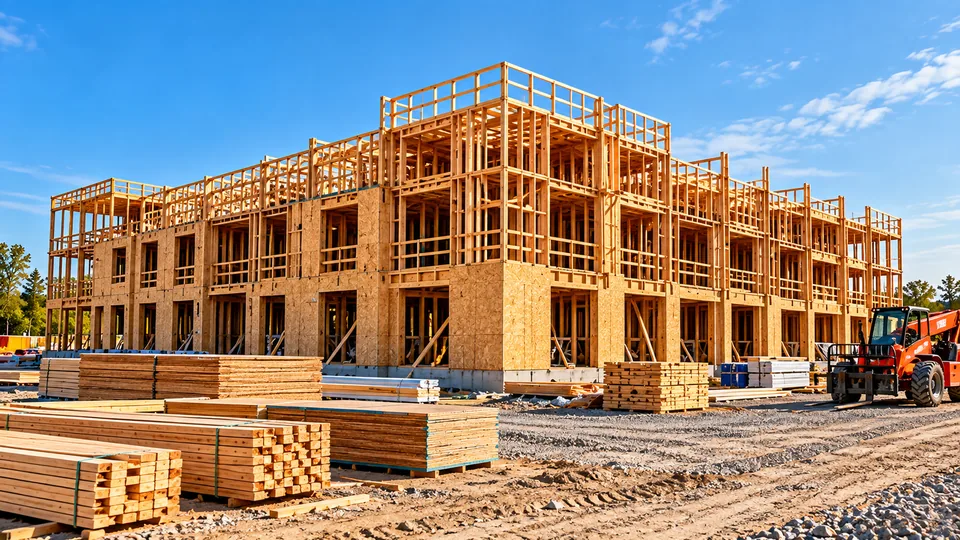
Builders risk underwriters focus on the period when several stories of framing stand without drywall, sprinklers or a finished envelope. They commonly ask about site security, cameras and lighting, fire watch, hot-work permits, standpipe availability as floors go up, the distance to the nearest hydrant and when the sprinkler system will be live. Deductibles, sublimits for water damage and even whether a market will quote can depend on those answers, so a site logistics plan belongs in the submission.
Values need to be split cleanly. Hard cost for each building, the parking structure or podium, site improvements and any amenity building should be listed separately, along with materials stored off site or in transit. If the lender or equity partner requires soft-cost and delay protection, the budget for interest during construction, real estate taxes, insurance, leasing costs and projected rents needs to be ready at inception, because that coverage typically cannot be added later on the same terms.
Water is the second theme. Podium decks, balconies, roofs and window systems are frequent sources of later claims. During construction, ask how the form treats water damage, whether it carries a separate water deductible and what testing or moisture monitoring the market expects.
Form terms, fire controls and values are explained in detail under builders risk for apartment and podium construction.
Delay to Lease-Up Is the Loss the Capital Partners Care About
A fire or water loss on an apartment project costs more than the rebuild. It pushes back the first temporary certificate of occupancy, delays rent and keeps the construction loan outstanding longer, which can collide with interest reserves, extension tests and the equity partner's return hurdles. Soft-cost and delay in completion coverage is the builders risk extension that may respond to some of that, depending on the form, the waiting period and how the insured period of delay is defined.
The amounts need a source. Lenders and investors often ask for the loss of rents or delay limit to tie to the pro forma, so the developer's underwriting model becomes an insurance document. Ask how the policy measures the delay, whether it starts at a scheduled completion date the insurer accepts and whether lost rents are measured on the projected stabilized rent roll or on a different basis.
Waiting periods, indemnity periods and the documents insurers ask for are covered under soft-cost and delay in completion coverage.
Wrap-Up or the General Contractor's Program
The liability decision is usually made at contract award, and it lasts for the life of the project. Under a traditional approach the general contractor and its subcontractors carry their own liability, name the owner entity and the lender as additional insureds and the developer relies on those endorsements reaching completed operations. A wrap-up instead places one liability program, and sometimes workers' compensation, for enrolled contractors on the site. An owner-controlled program puts the developer in charge of limits, claims handling and the completed-operations term, while a contractor-controlled program leaves administration with the general contractor and builds its cost into the contract price.
On a rental project the developer keeps the building and its claim history, which can make a dedicated completed-operations term attractive. On a for-sale condominium the case for a wrap is often stronger, because many contractor liability forms exclude or restrict condominium work, which narrows the markets available to the trades.
Texas adds rules that reach apartment projects. Insurance Code chapter 151 defines a construction project to exclude a single family house, townhouse, duplex or land development directly related to them, so a garden or podium apartment project generally falls inside the chapter. Section 151.051 requires a consolidated insurance program that provides general liability to provide completed-operations coverage for a policy period of not less than three years, and the chapter limits indemnity and additional insured provisions that shift the indemnitee's own negligence.
The administration and cost trade-offs are laid out in comparing an owner wrap with a contractor wrap.
A Rental Exit and a Condo Exit Carry Different Tails
The defect statutes in all three states treat for-sale units differently from rental apartments, and that difference drives how long liability protection must last. California Civil Code section 896 says its title applies to original construction intended to be sold as an individual dwelling unit, and section 941 generally bars actions under that title more than 10 years after substantial completion. A rental building is generally outside that title, although owners can still bring claims under other law, so counsel should confirm which rules apply if the units may later be sold.
Texas follows a similar line. Property Code chapter 27 defines a residence to include detached one- and two-family dwellings and units in a multiunit residential structure that are sold to the owners under a condominium or cooperative system, which brings for-sale condos under its 60-day notice process while rental apartment units are not listed. Arizona's purchaser dwelling action statute, A.R.S. section 12-1361, defines a dwelling as a single or multifamily unit designed for residential use, and section 12-552 bars contract actions against a person who develops real property more than eight years after substantial completion, with limited extensions.
California condominiums also require a Department of Real Estate public report before marketing. If improvements are unfinished when the application is filed, the department asks the subdivider to show adequate financial arrangements to complete them, which can bring a completion bond or other security into the program alongside any city improvement security.
How long the completed-operations term needs to run on for-sale product is covered under wrap-ups for condominium and for-sale residential work.
Bonds the Lender and the City Ask For
Bonds on a multifamily project come from two directions. The construction lender may require the general contractor to furnish performance and payment bonds naming the owner entity, often with a dual obligee rider that adds the lender. The city or county may require improvement security for off-site streets, utilities and frontage work, encroachment permit bonds for work in the public right of way and maintenance or warranty security after it accepts those improvements.
None of these is insurance. A performance bond protects the obligee if the general contractor defaults, the payment bond protects subcontractors and suppliers and the contractor owes the surety indemnity for any loss it pays. Improvement security posted in the owner entity's name is the developer's own credit obligation, and sureties typically ask the sponsor and often its principals to sign the indemnity agreement. Read each bond form against the lender's and the agency's requirements, because a rider or obligee name that does not match can hold up closing or a permit.
Obligee wording, dual obligee riders and default terms are explained under performance bonds on private multifamily contracts.
Affordable and HUD-Insured Financing
Multifamily developers using HUD-insured loans, tax credits or state housing finance agency funds face agency requirements on top of the lender's exhibit, including completion assurance, named-insured wording and caps on the general contractor's fee. Those terms are confirmed with each agency's current documents before the construction contract is signed.
The agency-by-agency terms are set out under affordable housing construction requirements.
Lease-Up, Temporary Occupancy and the Handoff to Operations
Most apartment projects lease the first building while later buildings are still under construction. Builders risk forms often end coverage for a building once it is occupied, put to its intended use or accepted, so the permanent property policy needs to attach to each building on the day it leaves builders risk, and the lender's loss payee and the take-out lender's terms should already be on that policy. Residents beside active work also change the liability picture for the owner entity, the property manager and the general contractor.
The handoff is also when the completed-operations clock usually starts. Keep the temporary and final certificates of occupancy, the notice of completion and any acceptance letters from the city, because they mark the start of repose periods, wrap-up completed-operations terms and bond release requests.
Occupancy clauses and permission-to-occupy endorsements are examined in builders risk when residents move in during construction.
Before You Ask for a Quote
What to Gather
- Construction loan agreement insurance exhibit and any lender insurance consultant comments
- Joint venture or operating agreement insurance covenants and the capital partner's approval rights
- Take-out or permanent lender insurance requirements, if the lender is known
- Hard and soft cost budget by building, podium, site work and amenities, with the pro forma rent schedule
- Construction schedule to each temporary certificate of occupancy, plus the site security and fire protection plan
- Owner-contractor agreement insurance and bond provisions, including any wrap-up language
- Entity chart showing the owner entity, managing member, investor entity and property manager
- City conditions of approval for off-site improvements and right-of-way permits
What to Ask the Insurer or Surety
- Which lender and investor requirements does the proposed builders risk meet as written, and which need a variance?
- How does the form measure delay, and does lost rent follow the pro forma rent schedule?
- What fire protection and water controls will the market require during framing, and how do they change the deductible?
- Would an owner wrap, a contractor wrap or the general contractor's own program fit this project, and why?
- How long would completed-operations protection last under each option, and does it survive a sale of the asset?
- Which bonds will the surety write in the owner entity's name, and who must sign the indemnity agreement?
Quick Answer
A multifamily developer usually needs owner-placed builders risk with soft-cost and delay protection, a wrap-up or contractor liability structure chosen at contract award, owner's and excess liability and lender- or city-required bonds, with limits largely set by the loan, equity and take-out documents.
Common Mistake
Binding builders risk to the construction lender's exhibit alone, then learning at conversion that the take-out lender or equity partner requires a different deductible, limit or named insured, which can force a rebuy or a variance under deadline.
Broker Perspective
A broker on a multifamily deal reads the loan, operating agreement and take-out terms side by side, prices the wrap-up decision against the exit plan and lines up the builders risk handoff with each building's occupancy date.
Coverage Impact
Whether units will be rented or sold as condominiums can change which defect statutes apply, which contractor liability forms respond and how long a completed-operations term typically needs to run.
Questions Buyers Ask
Our equity partner wants approval rights over the insurance. When should we bring them in?
Usually at the term sheet stage, before builders risk or a wrap-up is quoted. Operating agreements often give the capital partner approval of limits, deductibles and the liability structure, and some require the investor entity to be named on the policies. Bringing those terms in early lets the program be built once, instead of rebound after closing when the partner reviews certificates it has not seen.
If we sell the apartment building after stabilization, does our completed-operations exposure go with it?
Generally not. Claims tied to how the building was designed or built can still reach the developer entity and its contractors after a sale, and the buyer may be the claimant. How long protection lasts depends on the wrap-up or contractor policies, the state's repose period and whether the owner entity stays in existence. Ask counsel how the purchase agreement allocates construction claims, too.
We might convert the apartments to condos in a few years. Should that change the program now?
It can. California's builder statute applies to construction intended to be sold as individual units, and conversions sit under separate rules, while Texas and Arizona defect statutes treat condo units as residences or dwellings. Liability forms and wrap-up terms written for a rental hold may exclude for-sale condominium work. Tell the markets about a possible conversion at the start and have counsel review the exit plan.
Can one builders risk deductible satisfy both the construction lender and the agency lender?
Sometimes, but the two often look at different policies. The construction lender reads the builders risk, while the take-out lender cares about the permanent property policy that replaces it. If the take-out lender caps deductibles, check whether that cap applies to the construction period at all and ask for its answer in writing before the builders risk is bound.
Does a podium project's parking structure get insured differently from the wood-frame floors above it?
It is usually part of the same builders risk policy, but underwriters often value and rate it separately because concrete and wood frame burn and fail differently. List the podium, each building above it and site work as separate values. The schedule matters too, since the podium is often finished months before framing reaches its most exposed stage.
Official Sources
- Insurance Code ch. 151 (Texas consolidated insurance programs and indemnity limits), Texas Legislature. §151.001 construction project definition excludes a single family house, townhouse, duplex or related land development; §151.051 three-year completed-operations term for consolidated insurance programs Verified 2026-10-24.
- Property Code ch. 27 (Texas residential construction liability), Texas Legislature. §27.001 residence includes units in a multiunit structure sold under a condominium or cooperative system; §27.004 notice before the 60th day preceding suit Verified 2026-10-24.
- Civil Code §896 (California builder standards and scope), California Legislative Information. The title applies to original construction intended to be sold as an individual dwelling unit; condominium conversions are governed by other law Verified 2026-10-24.
- Civil Code §941 (California limitations period under Title 7), California Legislative Information. Actions under the title generally barred more than 10 years after substantial completion Verified 2026-10-24.
- A.R.S. §12-1361 (Arizona purchaser dwelling actions, definitions), Arizona State Legislature. Dwelling means a single or multifamily unit designed for residential use; seller includes those in the business of constructing or selling dwellings Verified 2026-10-24.
- A.R.S. §12-552 (Arizona statute of repose), Arizona State Legislature. Contract actions against a person who develops real property barred more than eight years after substantial completion Verified 2026-10-24.
- Subdivision Public Reports (California Department of Real Estate), California Department of Real Estate. Public report required before marketing subdivisions including condominium projects; financial arrangements to complete unfinished improvements Verified 2026-10-24.
Reviewed by the Principal, Gleason Insurance Brokers, LLCUpdated

