Maricopa County Rule 310 Dust Control Permits
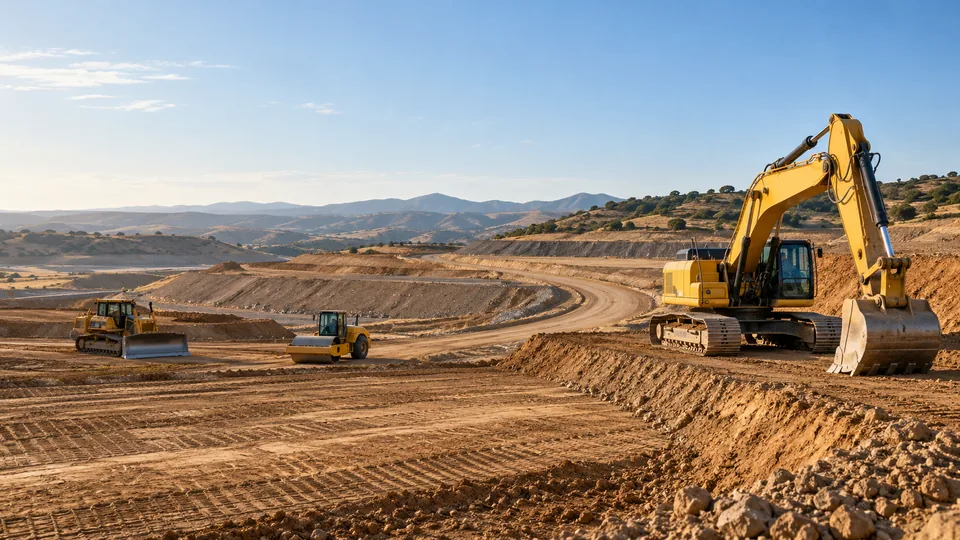
Maricopa County's Rule 310 governs fugitive dust from dust-generating operations. Section 302.1 requires a permit for an operation that will disturb a total surface area of 0.10 acre (4,356 square feet) or more. Section 302.2 extends that to smaller contiguous or commonly controlled areas that add up to the threshold. A dust control plan must be submitted with the permit application.
For sites with five acres or more of disturbed surface, the permittee must keep at least one Dust Control Coordinator on site, trained under section 309.2, and that training must be renewed at least once every three years. Large subdivision, industrial and data-center sites typically meet that threshold during mass grading.
Section 302.4 lists who is responsible for getting the permit: the property owner, lessee, developer, responsible official and permit applicant, along with general contractors and others. That list means more than one party on a project can be answerable, which makes the contract allocation of the permit, the plan and the coordinator a real decision.
How GCs structure liability for owner-imposed obligations is explained in general contractor project insurance.
What Dust Control Means for Insurance
Dust claims come in two forms. One is a regulatory penalty for a permit violation. Many liability policies exclude or limit fines and penalties, and some states restrict insuring them, so the practical protection is compliance and a clear contract on who pays. The other is a third-party claim, such as dust damage to a neighbor's vehicles, pools or HVAC equipment. A traffic accident blamed on blowing dust from a site is another example.
Third-party property damage and bodily injury claims usually turn to general liability, but the answer depends on the form. Some policies carry pollution exclusions broad enough that an insurer may argue dust is a pollutant. Ask how the contractor's policy defines pollutants and whether there is an exception for this kind of exposure. Contractors pollution liability can be a backstop where the general liability wording is unclear.
How pollutant definitions affect site work claims is explained under pollution coverage for site work.
Phoenix On-Site Stormwater Retention
A City of Phoenix Planning and Development interpretation states that City Code 32A-24 requires on-site retention of stormwater for all development, with the amount set by the Stormwater Policies and Standards Manual. The same document refers to retention for the 100-year, 2-hour design event and allows the requirement to be reduced for qualifying infill and redevelopment parcels, as long as post-development discharges do not exceed pre-development discharges.
Retention basins are excavation-heavy and often built early, and the Phoenix monsoon season can bring intense storms during construction. A storm that hits before basins and grading are finished can erode slopes, flood pads or push water onto a neighbor. The first is a builders risk question, and whether site work and earth movement are included depends on the form. The second is a liability question.
For redevelopment sites, the interpretation notes that any part of the parcel not previously developed must still retain the 100-year, 2-hour event. That can change the site plan, the excavation scope and the values a builders risk policy should carry.
Site work, earth movement and storm terms are explained under builders risk for site work and storms.
Phoenix Right-of-Way Permits: Insurance Before Issuance
A City of Phoenix Planning and Development notice on insurance for public right-of-way work (TRT/DOC/00645, rev. March 2025) ties its terms to Phoenix City Code Chapter 31, Article III, Section 31-40. Before a permit issues, the contractor must deliver an ACORD certificate showing general liability with bodily injury, property damage, products and completed operations and personal and advertising injury, containing no exclusions for explosion, collapse or underground operations. The notice calls that mandatory for all permits.
Limits must be at least a $1,000,000 combined single limit when construction cost exceeds $50,000 and $500,000 for right-of-way construction under $50,000. The certificate must state "The City of Phoenix is named as Additional Insured," and the contractor must notify the city within two business days of receiving notice that the policy is canceled, suspended or void.
For underground and utility contractors, the explosion, collapse and underground wording is the item most likely to hold up a permit. Some trade GL forms carry those exclusions or sublimits, so check the policy itself, not only the certificate. The city figures are a floor; owner, lender and subcontract limits are typically higher and vary by carrier guidelines, program and project.
Neighboring Mesa uses its own certificate form, explained in Mesa's right-of-way insurance rules.
Right-of-Way Construction Assurances Under Chapters 31 and 32
The city's assurance document (TRT/DOC/00032, rev. December 2021) says Chapters 31 and 32 of the Phoenix City Code require an assurance that improvements will be installed under the approved plans and that the customer will provide record drawings. The customer's civil engineer sets the secured amount, which Planning and Development approves under the fee schedule in Chapter 9, Appendix A.2. Posting it is a precondition to final construction plan approval and release of right-of-way permits, and to final approval of site plans, subdivision plats, abandonments, lot divisions and plat recording.
The city lists four instruments: cash equal to the cost of the right-of-way work, a performance bond in that amount from a surety accepted by the department and authorized in Arizona, a bank letter of credit or, at the department's discretion on building projects, an occupancy clearance agreement that withholds final utility clearance and stays attached to the parcel. A bond is returned after the off-site inspector accepts the permit and any required as-builts are submitted, and the city says to allow four weeks for release.
Each choice moves risk differently. Cash and a letter of credit use liquidity or bank lines. A bond uses surety credit and typically carries an indemnity agreement from the company and often its owners, subject to underwriting. An occupancy clearance agreement uses no credit but can hold up occupancy, which can delay a loan conversion or a tenant start, so read it with the builders risk delay terms and the loan schedule. Because release waits on as-builts, closeout paperwork affects how long the bond sits on a surety program.
Statewide rules for plat and improvement security are covered in Arizona subdivision improvement bonds.
Pavement Cuts in New Streets and the One-Year Repair Duty
Phoenix City Code Section 31-49.1, amended by Ordinance G-6395 effective December 13, 2017, and reproduced in the Street Transportation Department's Administrative Procedure 5.1 (updated March 2023), says a person who damages a public street while working in the right-of-way must repair it at its own cost to city standards, and the repair must be maintained for at least one year.
A cut in a "new street," one that received final acceptance less than two years before the cut, requires an asphalt mill and overlay or inlay across the full width of all lanes affected for at least 25 feet in both directions, plus slurry seal, with an exception for three or fewer cuts of two square feet or less on one permit. A cut in an older street requires slurry seal across a half or full width, again 25 feet each way.
That restoration can cost far more than the trench, so price it before bidding utility connections in recently paved Phoenix streets. It also extends the period in which the city can look to the permittee for a failed patch, which matters for the completed-operations side of GL and for how long any assurance tied to the work stays open.
How right-of-way permit security works across Arizona is covered in Arizona encroachment and right-of-way permit bonds.
Out-of-State Contractors and Licensing at Permit Issuance
The city's permit issuance document (TRT/DOC/00371, rev. January 2019) says an out-of-state contractor applying for a permit where construction valuation exceeds $50,000 needs an Arizona Department of Revenue surety bond or bond exemption certificate under A.R.S. 42-5007. It also says owners or developers who sell or rent property within one year of construction must use licensed general contractors for all new construction under A.R.S. 32-1121(A)(6), and that right-of-way permits need a state license number, the insurance certificate and the construction assurance.
For a national GC entering the Phoenix market, that Department of Revenue bond is a separate surety line to arrange before the first permit, on top of any performance and payment bonds. For a build-to-rent or for-sale developer, the licensing rule means the owner-builder route is typically not available, so the GC's insurance and bonds carry more of the developer's protection. Confirm the current requirement with the city and the Department of Revenue.
Projects outside city limits follow the county's own right-of-way and assurance rules, set out in unincorporated Maricopa County requirements.
Putting a Phoenix-Area Program Together
Large master-planned communities, industrial campuses and data centers in the Phoenix area often disturb dozens or hundreds of acres. That brings Rule 310's coordinator requirement into play and makes the dust control plan a daily operations document. The owner, the developer and the site contractor should agree in writing who holds the permit, who staffs the coordinator role and who pays if the county issues a notice of violation.
For multi-contractor sites, a project-specific liability placement or a wrap-up can reduce disputes about whose policy responds to a neighbor's dust or drainage claim. Whether that fits depends on construction value, the number of contractors and the lender's requirements.
Arizona statewide rules on contractor licensing, public works bonds and stormwater permits also apply. The Phoenix-area difference is the county dust regime and the city retention rule layered on top.
Statewide licensing, bond and stormwater rules are summarized under Arizona construction insurance and bond rules.
Data Center Ordinance in Chandler
Chandler permits data centers only in a Planned Area Development and holds their noise to measured baseline levels.
Those requirements are set out in Chandler data center ordinance.
Where These Rules Matter Most
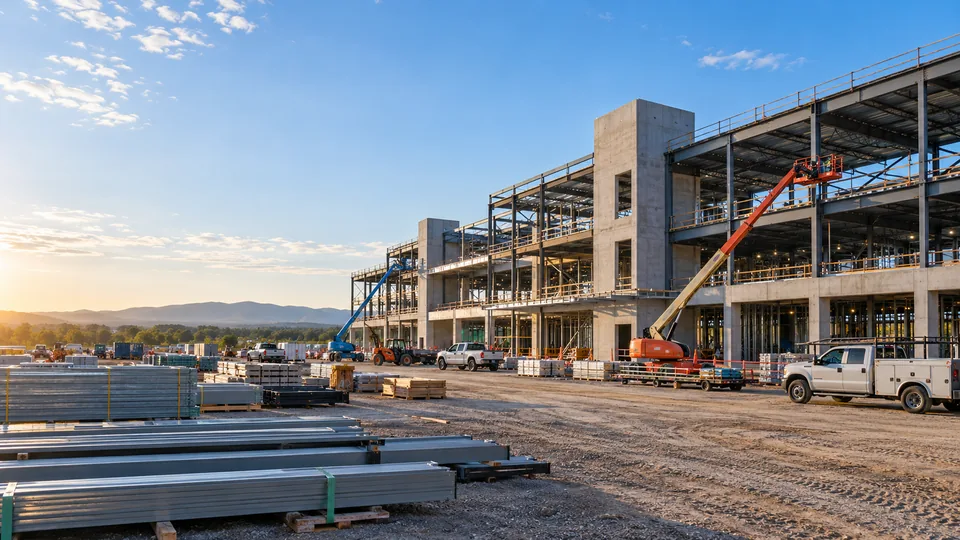
Data-center and industrial projects in the Phoenix area tend to combine very large disturbed areas with high-value equipment. That mix makes both the dust plan and the builders risk values significant early decisions. Commissioning and equipment exposures add their own builders risk questions on these sites.
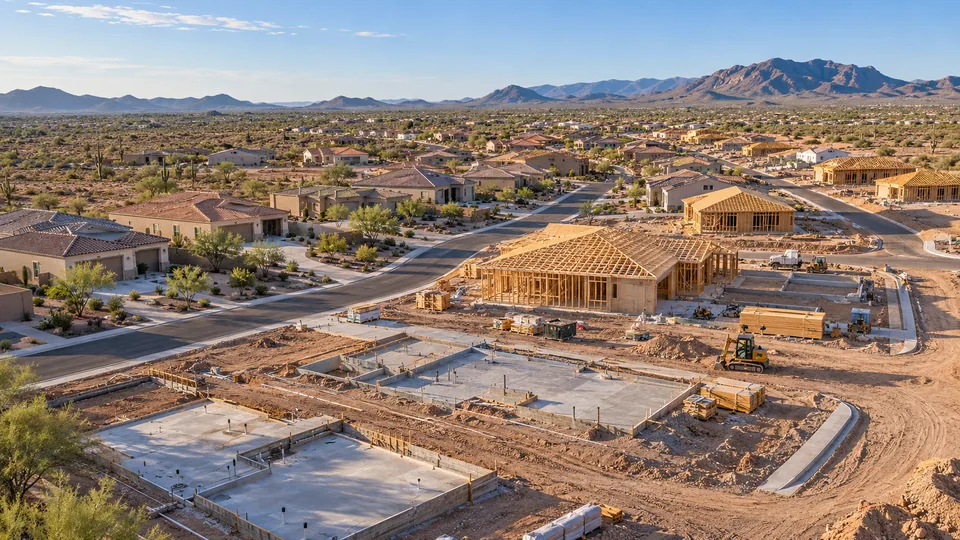
Residential subdivisions face the same dust rules plus retention basins that are often dedicated to an HOA or the city after completion. The completed-operations side of a basin that fails after turnover belongs in the contractor's liability review.
Commissioning and equipment values are explained under data center and industrial builders risk.
Before You Ask for a Quote
What to Gather
- Rule 310 dust control permit and approved dust control plan
- Name and training record of the site's Dust Control Coordinator for sites of five acres or more
- Retention design and the stormwater manual edition used for the site
- Contract language on permit holder, coordinator duties and penalty allocation
- Builders risk values including site work, basins and equipment
- Site contractor's liability and pollution certificates and pollutant definitions
- Right-of-way insurance certificate with the additional insured statement and the GL form showing no explosion, collapse or underground exclusions
- Engineer's estimate for the right-of-way construction assurance and the chosen instrument
What to Ask the Insurer or Surety
- How does each liability policy define pollutants, and could a dust claim fall under the exclusion?
- Are fines and penalties excluded or limited, and who pays them under the contract?
- Does builders risk include retention basins, grading and other site work during construction?
- What are the flood and storm deductibles during monsoon season?
- Would a project-specific or wrap-up program reduce disputes on a multi-contractor site?
- How is completed-operations coverage handled for basins turned over to an HOA or the city?
- Will utility connections cut a street accepted within the last two years?
- Does an out-of-state contractor need the Department of Revenue bond before its first permit?
Quick Answer
Phoenix-area projects need a Maricopa County Rule 310 dust permit and plan at 0.10 acre of disturbance, plus a trained coordinator at five acres, and Phoenix requires on-site stormwater retention for all development. Both shape contract allocation and site work insurance.
Common Mistake
Leaving the contract silent on who holds the Rule 310 permit and who pays penalties, then finding that the county can look to the owner, developer or general contractor.
Broker Perspective
A broker reads the pollutant definition on every Phoenix-area liability policy, because a broad definition can turn a routine dust claim into a coverage dispute.
Coverage Impact
Third-party dust claims may fall under general liability or be argued as pollution, depending on the form. Penalties are often excluded or limited. Retention basins during construction may or may not be included on a builders risk form.
Questions Buyers Ask
At what size does a Phoenix-area project need a Maricopa County dust permit?
Rule 310 requires a permit when a dust-generating operation will disturb 0.10 acre, or 4,356 square feet, or more, including contiguous or commonly controlled areas that add up to that size. A dust control plan goes in with the application. Almost every subdivision, commercial or civil job meets that threshold.
Who is liable under Rule 310, the owner or the contractor?
Possibly both. Section 302.4 lists the property owner, lessee, developer, responsible official and permit applicant, plus general contractors and others, as responsible for obtaining the permit. Because of that, the contract should spell out who holds the permit, who staffs the coordinator role and who pays if a violation is issued.
Can insurance pay a county dust penalty?
Often not. Many liability policies exclude or limit fines and penalties, and public policy may restrict insuring them. Insurance is more likely to respond to a third party's damage claim than to the penalty itself. Treat penalties as a compliance and contract issue, and ask your broker how each policy reads.
Does every Phoenix project need on-site stormwater retention?
A City of Phoenix interpretation says City Code 32A-24 requires on-site retention for all development, with the volume set by the stormwater manual around the 100-year, 2-hour event. Qualifying infill and redevelopment parcels may get a reduction if post-development discharges stay below pre-development levels. Ask the city which rule applies to your parcel.
What insurance does Phoenix require for a right-of-way permit?
A city notice under City Code Section 31-40 asks for an ACORD certificate showing general liability with no explosion, collapse or underground exclusions, at least $1,000,000 when construction cost exceeds $50,000 or $500,000 below that, and the statement that the City of Phoenix is named as additional insured. Confirm the current notice with the city.
Can a Phoenix right-of-way assurance be a surety bond?
Yes. The city's assurance document lists cash, a performance bond, a letter of credit and, at the department's discretion on building projects, an occupancy clearance agreement, each tied to the cost of the right-of-way work. A bond depends on surety underwriting and indemnity and is released after the inspector accepts the work and as-builts are submitted.
Official Sources
- Maricopa County Air Quality Rule 310, Fugitive Dust from Dust-Generating Operations, Maricopa County Air Quality Department. Permit required at 0.10 acre (4,356 sq. ft.) of disturbance (Sec. 302.1-302.2); dust control plan with the application (Sec. 402.1); trained Dust Control Coordinator on sites of five acres or more, training renewed at least every three years (Secs. 309-310); responsible parties include owner, developer and general contractors (Sec. 302.4). Verified 2026-10-23.
- Retention Policy, Infill and Redevelopment Parcels Interpretation (TRT/DOC/00768, rev. December 2016), City of Phoenix Planning and Development Department. City Code 32A-24 requires on-site stormwater retention for all development, sized by the Stormwater Policies and Standards Manual; 100-year, 2-hour design event; reduction for qualifying infill and redevelopment parcels when post-development discharges do not exceed pre-development discharges; previously undeveloped portions must still retain the 100-year, 2-hour event. Verified 2026-10-23.
- Insurance Requirement to Perform Public Right-of-Way Work (TRT/DOC/00645, rev. 03/25), City of Phoenix Planning and Development Department. PCC Ch. 31, Art. III, Sec. 31-40; ACORD certificate before permit with GL incl. completed operations and no exclusions for explosion, collapse and/or underground operations, mandatory for all permits; $1,000,000 CSL when construction cost exceeds $50,000, $500,000 below; "The City of Phoenix is named as Additional Insured"; cancellation notice within two business days. Verified 2026-10-27.
- Right-of-Way Construction Assurances (TRT/DOC/00032, rev. 12/21), City of Phoenix Planning and Development Department. Chapters 31 and 32 require an assurance of construction and record drawings; amount set by civil engineer and approved per Ch. 9 App. A.2; precondition to final plan approval, ROW permit release, site plans, plats, lot divisions and plat recording; cash, performance bond, letter of credit or occupancy clearance agreement equal to the cost of ROW work; bond release after inspector acceptance and as-builts, allow four weeks. Verified 2026-10-27.
- Permit Issuance Requirements (TRT/DOC/00371, rev. 1/19), City of Phoenix Planning and Development Department. Out-of-state contractors over $50,000 valuation need an ADOR surety bond or bond exemption certificate per A.R.S. 42-5007; owners/developers selling or renting within one year must use licensed general contractors for all new construction per A.R.S. 32-1121(A.6); ROW permits need license number, insurance certificate per Sec. 31-40 and construction assurance per Ch. 31 and 32. Verified 2026-10-27.
- Administrative Procedure 5.1, Requirements for Obtaining a Permit and Utility Construction Guidelines in Public Rights-of-Way (updated March 2023), City of Phoenix Street Transportation Department. Ordinance G-6395 effective December 13, 2017; PCC Sec. 31-49.1: duty to repair damaged street at own cost, repair maintained at least one year; new street = final acceptance less than two years before cut; full-width mill and overlay/inlay at least 25 feet each direction plus slurry seal; exception for three or fewer cuts of two square feet or less; slurry seal for other streets. Verified 2026-10-27.
Reviewed by the Principal, Gleason Insurance Brokers, LLCUpdated