
What Soft Cost and Delay Coverage Adds to Builders Risk
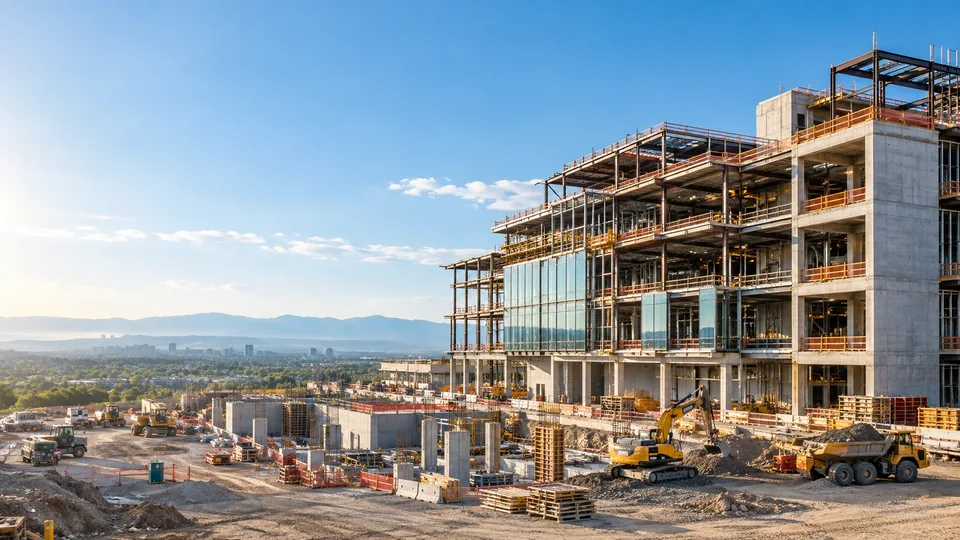
A base builders risk form pays to repair or replace the damaged work. It does not, by itself, pay for what the delay costs the owner. If a fire destroys the framing of a medical office building six weeks before turnover, the rebuild is a hard-cost claim. The extra months of construction loan interest, the architect's added construction administration, the property taxes on a building that is not yet earning rent and the rent itself are soft costs and delay losses.
Those losses are usually written as an endorsement or extension to the builders risk policy, so they follow the same causes of loss and exclusions. The AIA owner-contractor insurance exhibit lists them among the optional coverages an owner may choose to buy, describing soft costs as including construction loan fees, leasing and marketing expenses, added professional fees and carrying costs such as property taxes, permits, additional loan interest and insurance premiums. Because they are optional, the contract checkbox and the policy have to be compared line by line.
The hard-cost policy this extension attaches to is described in our guide to builders risk for the work itself.
Building the Soft Cost Limit from the Development Budget
The most reliable way to size soft cost coverage is to start from the development budget the lender approved and ask, for each soft-cost line, how much more would be spent if completion slipped by the length of a realistic rebuild. Interest is usually the largest item: the outstanding loan balance at the likely time of loss multiplied by the rate for the added months. Many developers model the loss at the point of peak exposure, often late in construction when the loan is nearly fully drawn.
Other lines follow the same logic. Architect and engineer fees for redesign and added construction administration, legal and accounting fees, extended permit and inspection costs, added builders risk and liability premiums, real estate taxes during the delay and renewed leasing and marketing expenses all belong in the worksheet if they are real. Some insurers write soft costs on a scheduled basis, listing each item with its own amount, while others write a blanket limit. A scheduled form can limit recovery on a line that turns out larger than estimated, so ask whether amounts can shift between lines.
Keep the worksheet. It supports the limit at underwriting, and it is the starting point for proving the loss after a claim.
- Additional construction loan interest and fees
- Added architect, engineer, legal and accounting fees
- Real estate taxes and insurance premiums during the delay
- Permit, inspection and leasing or marketing expense
- Rents, revenue or gross earnings lost during the delay
Loan agreements often set soft cost and rent limits directly; compare yours with construction lender insurance requirements.
Rents, Revenue and the Scheduled Completion Date
Delay in completion coverage, sometimes written as loss of rents or loss of gross earnings, responds to income the project would have produced had it been completed on schedule. For a rental property, that is usually net rent based on the lease-up plan. For a hotel, it may be gross operating income less non-continuing expenses. For an owner-occupied facility, it may be the added cost of staying in temporary space.
Most delay forms measure the loss from the scheduled date of completion stated in the policy or the underwriting submission. If that date is optimistic and the project was already running late before the loss, the insurer will typically argue that part of the delay was not caused by the loss. Give the underwriter a realistic date, update it if the schedule moves materially and keep the current critical path schedule in the project file.
The AIA exhibit also lists loss of use, business interruption and delay in completion as an owner-selected coverage for loss of use or inability to conduct normal operations due to a covered cause of loss. Whether a given form follows that broad description or a narrower definition depends on the wording, which is why the definition of the insured loss is worth reading before the limit.
Rent sizing on apartment projects, where lease-up seasons matter, is covered under rental income on multifamily builders risk.
Waiting Periods and Indemnity Periods
The waiting period is a deductible stated in days. Delay losses incurred during the first stretch of delay are not paid, and coverage starts once that period has passed. Some forms apply the waiting period from the scheduled completion date; others from the date of the physical loss. A short delay on a project with a long waiting period may produce no recovery at all, which is often the right trade if it lowers cost, but it should be a decision rather than a surprise.
The indemnity period caps how long delay losses are paid. If the realistic rebuild for a destroyed building is 10 months, including redesign, permitting, procurement of long-lead equipment and reconstruction, a six-month indemnity period leaves the last four months with the developer. Long-lead items such as switchgear, elevators or custom curtain wall can stretch a rebuild well past the original framing duration.
Ask how the waiting period interacts with the soft cost limit. On some forms it applies only to rents and revenue; on others it applies to every soft cost item as well.
Developers building a full program around these choices can start with insurance and bonds for developers.
Delays That Usually Fall Outside the Coverage
Delay coverage is not schedule insurance. Most forms respond only when the delay is caused by direct physical loss or damage that the builders risk policy insures. A delay from a supply shortage, a labor dispute, a permit hold, a lender funding issue, a design change or a contractor's default generally falls outside it, even if the financial effect looks identical. Delays caused by excluded perils, such as flood or earthquake where those are excluded, are treated the same way unless the peril is added back.
Contractors face a related question. A GC's extended general conditions and its exposure to liquidated damages after a covered loss are not the owner's soft costs, and they may or may not be insured depending on whose interest the extension protects. If the GC wants protection for its own delay costs, that needs to be negotiated explicitly with the insurer and reflected in the contract.
GCs weighing their own delay exposure can compare options on our page for general contractor insurance and bonds.
Proving a Soft Cost and Delay Claim
Delay claims are often decided by documents. The insurer will compare the as-planned schedule at the time of loss with the actual recovery schedule and ask how much of the slip the loss caused. It will want loan statements showing interest accrued, invoices for added fees, tax bills, leasing reports and the pro forma rent roll. Some insurers retain their own scheduling consultant, so developers with large exposures may want one too.
Record keeping before a loss helps. Keep monthly schedule updates, the approved budget with change history and the lender's draw records. Name the lender as loss payee where the loan requires it, and confirm whether delay proceeds are paid to the owner, the lender or both. Clear documents rarely guarantee a result, but they usually shorten the argument.
The underwriting and claim documents worth keeping from day one are listed in our project insurance documents checklist.
Before You Ask for a Quote
What to Gather
- Lender-approved development budget with every soft-cost line
- Loan terms, draw schedule and projected balance at peak exposure
- Current critical path schedule and the scheduled completion date
- Pro forma rent roll or revenue model and the lease-up plan
- Long-lead equipment list with replacement lead times
- Soft cost and delay worksheet showing how each limit was built
What to Ask the Insurer or Surety
- Is soft cost written as a blanket limit or scheduled by item, and can amounts shift between items?
- Does the waiting period run from the date of loss or the scheduled completion date?
- Which items does the waiting period apply to: rents only or all soft costs?
- What indemnity period can you offer, and does it match a realistic rebuild?
- Are expediting, extra expense, ordinance or law and civil authority included, and at what sublimits?
- Is the contractor's own delay cost insured under this extension or excluded?
Quick Answer
Soft cost and delay in completion coverage extends builders risk to the developer's added interest, fees, taxes and lost rent when a covered physical loss delays the project. Limits, waiting periods and indemnity periods are set separately and should be built from the budget and schedule.
Common Mistake
Picking a round-number limit and a six-month indemnity period without modeling the rebuild. Redesign, permitting and long-lead equipment can stretch recovery well beyond the original construction time.
Broker Perspective
We rebuild the limit from the lender's budget and test it against a peak-exposure loss date, then read the waiting period trigger, because the same days can mean very different recoveries.
Coverage Impact
A well-sized extension may fund carrying costs and lost rent through the rebuild. Delays from uninsured causes or excluded perils are generally outside it, and scheduled limits can cap individual cost lines.
Questions Buyers Ask
Does soft cost coverage pay if our project is late because a supplier missed a delivery?
Usually not. Soft cost and delay in completion coverage generally responds only when the delay is caused by direct physical loss or damage that the builders risk policy insures. Supplier failures, labor disputes and permit holds are typically outside it, even though the financial effect is similar. Some forms offer narrow extensions for damage at a supplier's premises, so ask.
How is a waiting period on delay in completion different from a deductible?
It works like a deductible measured in days instead of dollars. Delay losses during the waiting period are not paid, and coverage starts afterward. The key detail is when the clock starts: some forms run it from the scheduled completion date and others from the date of the physical loss, which can produce very different results.
Should the soft cost limit include the full construction loan interest?
Not the full interest budget, but the added interest a covered delay would cause. Estimate the loan balance at the point of highest exposure, apply the rate for a realistic rebuild period and add fees and other carrying costs. Lenders often specify minimums, so compare your estimate with the loan agreement.
Can a general contractor insure its own extended general conditions after a fire?
Sometimes, but it is not automatic. Most soft cost extensions protect the owner's financial interest, not the contractor's extended overhead or liquidated damages exposure. A GC that wants that protection has to ask the insurer for it and make sure the contract reflects who bears those costs after a covered loss.
Who receives delay in completion proceeds when there is a construction lender?
It depends on the loss payable clause and the loan documents. Many lenders require to be named as loss payee on soft cost and rent coverage as well as hard costs, so proceeds may be paid jointly or to the lender first. Confirm the wording before closing so the money reaches the project when it is needed.
Official Sources
- AIA Document A101-2017 Exhibit A, Insurance and Bonds (sample), Sections A.2.4.1 through A.2.4.7, American Institute of Architects. Optional owner coverages: loss of use, business interruption and delay in completion; ordinance or law; expediting cost; extra expense; civil authority; ingress and egress; soft costs including loan fees, leasing and marketing, professional fees, taxes, permits, added interest and premiums. Verified 2026-10-24.
- NFPA Construction Site Fire Safety Fact Sheet (NFPA 241), National Fire Protection Association. Construction site fires cause large direct property losses and wider economic effects; noncompliance with NFPA 241 may lead to work stoppage and delays. Verified 2026-10-24.
Reviewed by the Principal, Gleason Insurance Brokers, LLCUpdated

