
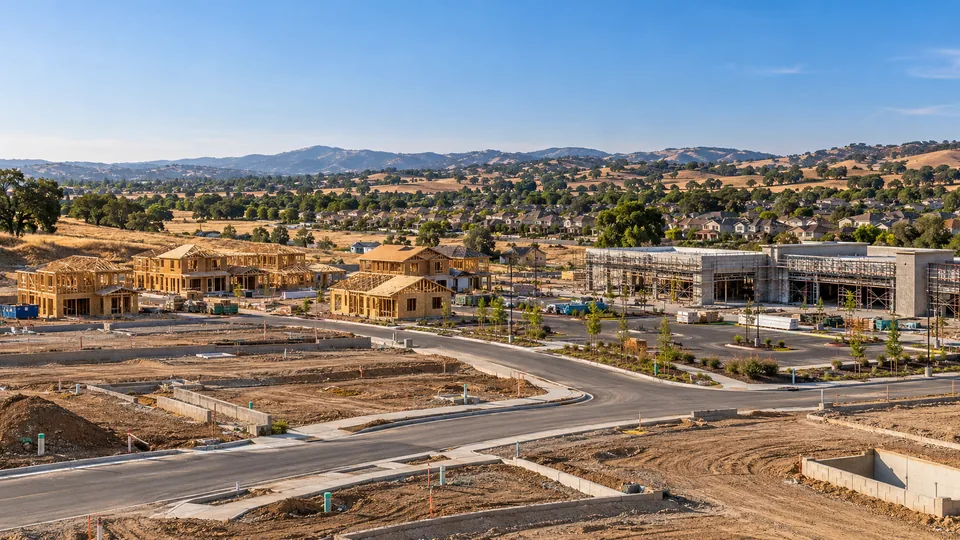
Logistics Specific Plans Set the Shape of the Pipeline
Inland Empire cities steer warehouse growth through specific plans. Fontana's Southwest Industrial Park Specific Plan is built around the transportation industry, with truck facilities, warehouse and distribution sites and vehicle and truck storage yards, and the City lists amendments numbered 1 through 19. Fontana's West Valley Logistics Center Specific Plan describes a 289-acre site bisected by Armstrong Avenue with 3,600,000 square feet of proposed industrial commerce center development, a detention basin and hillside open space by the Jurupa Hills.
Ontario's planning department lists dozens of specific plans, many of them logistics and business parks such as South Ontario Logistics Center and Colony Commerce Center, and Moreno Valley lists a World Logistics Center specific plan. The result is a pipeline of very large single buildings, each one representing a concentrated builders risk value and a contract chain of GC, tilt-up, steel, roofing and site subcontractors.
How industrial projects are typically insured from grading through turnover is covered on the project page for industrial and logistics construction insurance.
What Fontana's Industrial Standards Add to the Job
Fontana's Industrial Commerce Center Sustainability Standards require solar panels on all buildings greater than 400,000 square feet to supply power for non-refrigerated uses, and a landscape buffer with trees and a solid decorative wall at least 10 feet high for any warehouse larger than 50,000 square feet built next to sensitive receptors. The City also lists truck routing to its truck route map, zero-emission on-site operating equipment, electric-vehicle parking and plug-in power at loading docks for refrigerated trucks.
Each of those items changes the build. Rooftop solar, inverters, switchgear and dock power add electrical systems that have to be tested and energized before turnover. A buffer wall along a residential edge puts cranes, deliveries and dust closer to neighbors. Those details belong in the insurance submission, not just the drawings, because underwriters price what they are told.
How testing, commissioning and electrical values are typically handled is explained in builders risk for industrial buildings with high-value systems.
Builders Risk on Large Tilt-Up and Solar-Equipped Warehouses
A single logistics building can carry a large completed value on one site, so the builders risk limit, the deductible for wind and the treatment of materials stored off-site deserve attention. Panels cast on the slab, steel on order and solar equipment awaiting installation may sit in different places at different times. Ask whether the form extends to off-site storage and transit, and at what sublimit.
Testing and commissioning is the other question. Many builders risk forms limit or exclude loss during hot testing unless the coverage is extended, and solar arrays and dock power systems are energized near the end of the job when values are highest. Ask whether testing is included and when it starts and ends. Also ask how partial occupancy by a tenant affects coverage if the owner wants racking installed before final completion.
Values, off-site storage and partial occupancy are covered in more depth under builders risk insurance for ground-up projects.
Truck Yards, Hauling and Pollution Exposure
Specific plans built around truck terminals and storage yards bring fueling, equipment maintenance and heavy hauling onto the site during construction. Mass grading on large industrial pads also means import and export of soil, sometimes from sites with prior agricultural or industrial use.
A GL policy with a total pollution exclusion may not respond to a fuel release or contaminated soil discovered mid-grade. Contractors pollution liability is built for that exposure, but forms vary on transportation, disposal sites and known conditions. Site contractors moving large volumes of soil should ask how their CPL treats material hauled off the project.
Off-Site Improvements and the Bonds That Secure Them
Large logistics approvals usually come with street widening, signals, storm drain and utility work in the public right of way. Cities typically require the developer to secure that work before map recording or permit issuance, often with performance and payment bonds naming the city as obligee.
A bond is not insurance. It protects the city, and the developer as principal owes the surety indemnity if the surety pays. Sureties underwrite the developer's balance sheet and the project's financing, so expect requests for financial statements, the loan commitment and the improvement cost estimate. Getting those ready before entitlement closes can keep the bond from holding up the permit.
County and City Bond Requirements Differ Across the Region
Improvement security in the Inland Empire is set agency by agency. Unincorporated Riverside County and unincorporated San Bernardino County each set their own performance, labor and materials and warranty percentages, and cities such as Fontana, Ontario and Menifee use their own agreement forms, permit insurance terms and release rules. A developer or contractor working in more than one jurisdiction typically confirms each agency's current form before the bond is sized, since the percentages and release timing can vary.
- Unincorporated Riverside County
- Unincorporated San Bernardino County
- City of Fontana
- City of Ontario
- City of Menifee
The county rules are set out under Riverside County improvement bond requirements.
Building an Inland Empire Program
A typical Inland Empire warehouse program combines builders risk sized to the completed value with testing and off-site extensions, the GC's liability program with project limits where the contract requires them, CPL for site and grading contractors and improvement bonds for the public work. California rules on licensing and public-works bonding still sit underneath every project.
The local specific plan and city standards decide the details. Read them together with the lender exhibit and the tenant lease, then build the submission around the real scope. For a review of a specific Inland Empire project, request a quote or call 844-978-7283.
Before You Ask for a Quote
What to Gather
- The applicable specific plan and the City's conditions of approval
- Solar, switchgear and dock-power scope with values and energizing dates
- Site plan showing sensitive receptors and buffer-wall location
- Grading quantities, import and export plans and the geotechnical report
- Lender insurance exhibit and tenant lease insurance requirements
- Off-site improvement cost estimate and the city's bond forms
What to Ask the Insurer or Surety
- Does the builders risk form include testing and commissioning, and when does it start and end?
- What sublimits apply to materials stored off-site or in transit?
- How does partial occupancy by the tenant affect the builders risk?
- Does the CPL respond to soil transported and disposed of off-site?
- Which party carries third-party exposure along the residential edge during wall construction?
- What will the surety need before issuing improvement bonds to the city?
Quick Answer
Inland Empire warehouses are shaped by logistics specific plans and local standards such as Fontana's, which add rooftop solar and residential buffer walls. That changes builders risk values, testing coverage and third-party exposure.
Common Mistake
Insuring a large warehouse as a plain shell and leaving testing and commissioning off the builders risk, then energizing solar and dock power with no coverage for testing loss.
Broker Perspective
Start from the specific plan and the city's conditions of approval. They tell you what systems, off-site work and neighbors the underwriter needs to hear about.
Coverage Impact
Builders risk may need testing, off-site and transit extensions; CPL may respond where GL excludes pollution, depending on the form; improvement bonds protect the city, not the developer.
Questions Buyers Ask
Does Fontana's solar requirement change our builders risk on a big warehouse?
It can. Buildings over 400,000 square feet in Fontana must carry solar for non-refrigerated power, which adds equipment value and an energizing phase near completion. Many builders risk forms limit loss during testing unless the coverage is extended. Ask whether testing is included and whether solar equipment stored off-site before installation is insured.
Who is responsible for damage to neighbors while building a buffer wall next to homes?
It depends on the contracts. The GC and the wall subcontractor typically carry general liability for third-party bodily injury and property damage, and the developer may be added as an additional insured. Check the indemnity clause and the additional-insured endorsement before work starts, because homeowners next door may claim dust, vibration or fence damage.
Is a truck yard project different from a warehouse for insurance purposes?
Often, yes. Truck terminals and storage yards bring fueling areas, heavy paving and more equipment movement onto the site. A GL total pollution exclusion may not respond to fuel spills or contaminated soil, so site and paving contractors should review contractors pollution liability, including how it handles hauling and disposal.
Can an improvement bond for warehouse frontage work be released in stages?
Many cities allow reductions after inspection and acceptance of completed portions, but the terms come from the city's improvement agreement, not the surety. Ask the city how partial releases work and what warranty or maintenance security remains after acceptance. Your surety will need the release documents to close out its exposure.
Official Sources
- Industrial Sustainability Standards, City of Fontana. Solar required on buildings greater than 400,000 square feet; landscape buffer and decorative wall at least 10 feet high for warehouses over 50,000 square feet adjacent to sensitive receptors; truck routing, zero-emission equipment, EV parking and dock plug-in standards. Verified 2026-10-23.
- West Valley Logistics Center Specific Plan, City of Fontana. 289-acre site bisected by Armstrong Avenue; 3,600,000 square feet of proposed industrial commerce center development; detention basin and hillside open space near the Jurupa Hills. Verified 2026-10-23.
- Southwest Industrial Park Specific Plan, City of Fontana. Plan oriented to the transportation industry with truck facilities, warehouse and distribution and truck storage yards; Amendments No. 1 through No. 19. Verified 2026-10-23.
- Specific Plans, City of Ontario. List of Ontario specific plans including South Ontario Logistics Center and Colony Commerce Center. Verified 2026-10-23.
- Specific Plans, City of Moreno Valley. Moreno Valley lists the World Logistics Center (SP-WLC) among its specific plans. Verified 2026-10-23.
Reviewed by the Principal, Gleason Insurance Brokers, LLCUpdated

