
CEC Opt-In Certification: Labor and Community Benefits Conditions
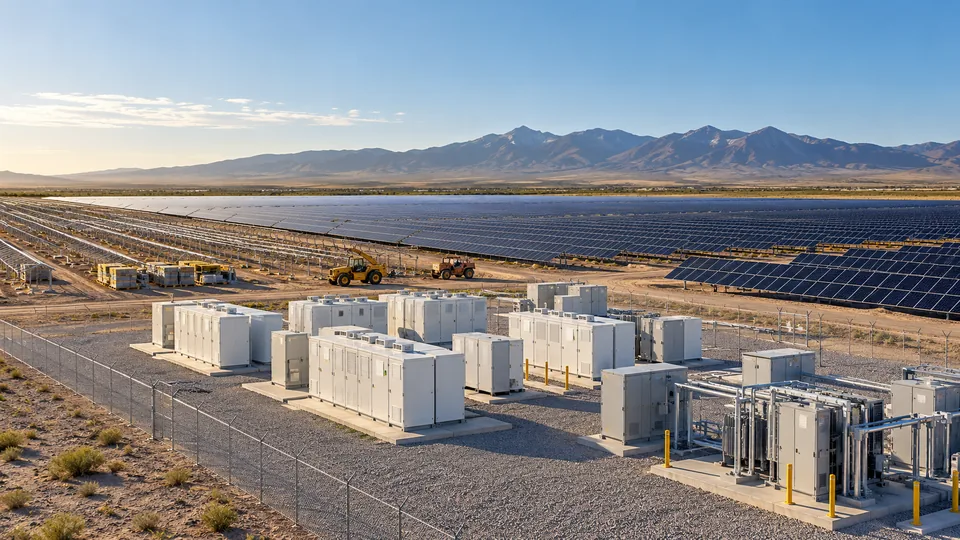
AB 205 (2022) created an optional state permitting path. The California Energy Commission acts as lead agency under CEQA and must decide within 270 days of a complete application. Eligible facilities include solar of 50 megawatts or more and storage "capable of storing 200 megawatt-hours (MWh) or more."
Approval requires findings that the applicant certified prevailing wage, or equivalent, for all construction, uses a skilled and trained workforce, or equivalent, and "has entered into a community benefits agreement." Prevailing wage raises the payroll that drives workers' compensation premium, and a workforce condition can narrow the qualified subcontractor pool, which a surety may weigh on the EPC contract. The program page does not describe decommissioning security, so confirm any security terms in the Commission's decision.
Programs for the civil and electrical trades that build these sites are explained in insurance and bonds for civil and underground contractors.
Battery Storage Safety: SB 38 and General Order 167-C
The CPUC adopted General Order 167-C by Resolution ESRB-13 on March 13, 2025, implementing Public Utilities Code section 761.3 as amended by SB 1383 (Stats. 2022, ch. 725) and SB 38 (Stats. 2023, ch. 377). Storage owners must keep the emergency response and emergency action plan section 761.3(g) requires, and Senator Laird's office said those plans are developed with local responders and submitted to the county and city.
An ESS Owner is any person or entity that owns, controls, operates, maintains or manages an ESS facility, so independent power producers fall within it; publicly owned utility storage and customer-owned distributed storage are excluded. Assets under 50 megawatts are exempt from the full operation standards, and new assets file an initial certification within 90 days of active service, or 180 days after the effective date if later. Underwriters typically ask for these plans when pricing fire, pollution and liability exposure.
Battery electrolyte, fire runoff and other pollution exposures during construction are addressed by contractors pollution liability insurance.
Kern County: Conditions Adopted for the Sandrini Solar Project
No countywide decommissioning code section was readable for this page; what follows are the conditions the County adopted for the Sandrini Solar project on January 25, 2022. Mitigation measure 4.11-1 requires a Decommission Plan before any building permit, with a cost estimate that assumes the County hires a contractor after abandonment, net of salvage value. Security may be an irrevocable letter of credit, a surety bond, a trust fund or another assurance the County approves; the issuer gives 30 days' notice before terminating, and the amount is reviewed every 5 years at the operator's cost. Removal is due within 60 days of County notice after 24 consecutive months out of operation.
The same conditions required a secured road-repair agreement backed by video logs and a Fire Safety Plan approved by the Kern County Fire Department before grading or building permits. Each project's conditions control.
Other County bond and permit requirements are covered on Kern County development bond requirements.
Riverside County: Development Agreements and Closure Security
Board Policy B-29, adopted November 8, 2011, and amended May 21, 2013, bars Ordinance No. 348 or 460 approval of a solar power plant until the Board approves a development agreement, and encroachment permits also need a franchise. Plants of 20 megawatts or less are exempt unless applications were split. The owner must contractually require contractors and subcontractors with contracts over $100,000 to hold a Board of Equalization jobsite sub-permit, with the contractor list due before grading.
The County's solar supplemental application form asks for a closure and site restoration plan with "proposed provisions for financial security." No security amount, form or release trigger was verified for this page; those are set in each development agreement and the project's conditions, so confirm them with the County.
County bond and permit rules beyond solar are covered on Riverside County development requirements.
San Bernardino County: Closure Plans and Reclamation Surety
The County's development code as posted, shown in the existing-code exhibit of an October 21, 2021, Planning Commission staff report, requires a closure, revegetation and rehabilitation plan for commercial solar under section 84.29.070, approved before building permit, with above-ground structures removed to 3 feet below grade. A required finding is that "adequate surety is provided for reclamation" if production stops for 180 continuous days or the site is abandoned.
The same report proposed a section 84.29.120 under which the surety stays in effect through operation until reclamation and revegetation are complete, with the amount adjusted for disturbed lands and inflation. Board adoption was not confirmed for this page, so confirm the current text with Land Use Services.
Other County requirements for developers and contractors are covered on San Bernardino County development requirements.
Imperial County: Conditions Adopted for the Drew Solar Project
These facts come from County documents filed on the state CEQAnet site. In the conditions the County adopted for the Drew Solar project in 2019, a Reclamation and Decommissioning Plan is due before the first grading or building permit, restoring each CUP area to its pre-project agricultural condition. Security is "financial assurance/bonding in an amount equal to a cost estimate prepared by a California-licensed general contractor or civil engineer." Fair-share haul-route road payments are due in full before grading, building and encroachment permits. The project could run up to 40 years.
For stand-alone storage, the County's February 2025 initial study for the Saavi Imperial Power battery project lists battery storage as a conditional use in the M-2 zone, with a 40-year CUP followed by decommissioning. Each project's conditions control.
Road and right-of-way security on county roads is explained in California encroachment permit bonds.
What These Conditions Mean for Bonds and Insurance
A decommissioning or reclamation bond is a surety obligation, not insurance. On a 30- to 40-year project with 5-year reviews or inflation adjustments, the amount can rise, and a surety typically weighs the term, the recalculation method and cancellation notice before writing it. Some sureties may ask for collateral or broader indemnity, and a letter of credit uses bank capacity instead, subject to underwriting.
During construction, builders risk with delay coverage, contractors' pollution liability and project liability limits are typically matched to the storage system's fire profile. Terms can vary by carrier guidelines and programs.
How sureties underwrite performance, payment and long-term obligations is explained in construction surety bonds.
Before You Ask for a Quote
What to Gather
- Adopted conditions of approval for the project
- The decommissioning plan and its cost estimate
- Development agreement security terms, if in Riverside County
- GO 167-C emergency plans for any storage asset
- Road-use and haul-route requirements
What to Ask the Insurer or Surety
- Which forms of security will the County accept?
- How often is the amount reviewed?
- What cancellation notice applies to the bond?
- Does security run through revegetation?
Quick Answer
California solar decommissioning security is typically set by county conditions or code; the CEC opt-in path adds labor and community benefits conditions, and GO 167-C adds battery emergency plan duties.
Common Mistake
Treating one project's adopted conditions as countywide code. The Kern and Imperial terms read here were adopted for single projects.
Broker Perspective
Review intervals, inflation adjustments and cancellation notice are typically what a surety asks about first on long-tail decommissioning security.
Coverage Impact
Decommissioning bonds are surety, not insurance; fire, pollution and road-damage exposure depend on the policies issued and their terms.
The Same Requirement in Other States
Questions Buyers Ask
Is CEC opt-in certification required for California solar projects?
No. AB 205 made it optional. Projects that use it take on prevailing wage, skilled and trained workforce and community benefits conditions.
Does General Order 167-C apply to independent battery storage owners?
Yes, it reaches any entity owning, operating or managing an ESS facility, with exclusions for publicly owned utility storage and customer-owned distributed storage.
What security did Kern County require on Sandrini Solar?
A Decommission Plan and a letter of credit, surety bond, trust fund or other approved assurance before any building permit, reviewed every 5 years. Each project's conditions control.
How did Imperial County size the Drew Solar bond?
By a cost estimate from a California-licensed general contractor or civil engineer, due before the first grading or building permit.
Official Sources
- Opt-In Certification Program, California Energy Commission. AB 205 optional path; 270-day decision; 50 MW solar and 200 MWh storage eligibility; prevailing wage, skilled and trained workforce and community benefits agreement conditions Verified 2026-10-26.
- General Order 167-C (Resolution ESRB-13, March 13, 2025), California Public Utilities Commission. Adoption date; SB 1383 and SB 38 (Stats. 2023, ch. 377); emergency plan under PUC 761.3(g); ESS Owner definition and exclusions; 50 MW exemption; initial certification timing Verified 2026-10-26.
- CPUC Sets New Safety Standards and Enhances Oversight of Emergency Plans for Battery Energy Storage Facilities (March 13, 2025), California Public Utilities Commission. Storage owners must develop emergency response and emergency action plans Verified 2026-10-26.
- Governor Newsom Signs Legislation to Enhance Battery Storage Safety Standards (October 9, 2023), Office of Senator John Laird. SB 38 plans developed with local emergency responders and submitted to the county and city Verified 2026-10-26.
- Sandrini Solar Project Final Mitigation Measure Monitoring Plan (January 25, 2022), Kern County. MM 4.11-1 Decommission Plan and financial assurance forms, 30-day notice, 5-year review, abandonment terms; secured road-repair agreement; MM 4.14-1 Fire Safety Plan Verified 2026-10-26.
- Board Policy B-29, Solar Power Plants, Riverside County Board of Supervisors. Development agreement before Ordinance 348 approval; franchise for encroachment permits; 20 MW exemption; contractor sub-permit clause over $100,000 Verified 2026-10-26.
- Solar Power Plant Supplemental Information Form, Riverside County Planning Department. Closure and site restoration plan with proposed financial security Verified 2026-10-26.
- Planning Commission Staff Report, Renewable Energy and Conservation Element Code Amendments (October 21, 2021), San Bernardino County Land Use Services. Existing section 84.29.070 closure plan and 3-foot removal; reclamation surety finding; proposed section 84.29.120 surety terms; stand-alone energy storage use; mining-style review Verified 2026-10-26.
- CEQA Findings, Drew Solar Project Final EIR (October 2019), County of Imperial (filed with the State CEQAnet database). Reclamation and Decommissioning Plan and bonding before first grading or building permit; licensed estimate; haul-route fair share; farmland mitigation; 40-year term Verified 2026-10-26.
- Saavi Imperial Power Battery Storage System Initial Study and NOP (February 2025), County of Imperial (filed with the State CEQAnet database). Battery storage as a conditional use in M-2; reclamation plan among later approvals; 40-year CUP followed by decommissioning Verified 2026-10-26.
Reviewed by the Principal, Gleason Insurance Brokers, LLCUpdated

